
EN
- ES
- EN
17th National Research Competition in Life and Earth Sciences
Rare diseases
Research Centre or Institution : Instituto de Investigación Hospital 2 de Octubre. Madrid.
Hereditary haemochromatosis (HH) is characterised by iron overload in a wide range of organs. Different mutations in several independent locations of the human genome give rise to different types of recessive autosomic HH (HH1, HH2 and HH3) or a dominant form (HH4). Rare haemochromatoses are mainly of the HH2, HH3 and HH4 types. A very limited therapeutic arsenal exists against the different presentations of HH and it is basically aimed at eliminating iron from the organism by means of regular phlebotomies or iron chelation. Nevertheless, there are no specific therapies to protect against and/or attenuate the adverse effects of iron overload in different organs, in juvenile forms as well as later presentation in adults. This is due to limited knowledge regarding iron-overload induced cellular damage and its specific phenotypical alteration in the organs and tissues affected by HH. Within this context the project has three aims. Firstly: massive tracing of global alterations in the proteome and transcriptomein tissues affected by iron overload. Second: typification of different immune responses in HH. Third: exploration of adaptation / epigenetic response mechanisms to iron deposits. These aims will be met by using preclinical models of mice which are carriers of polymorphisms that cause HH, and results will be validated by analysis using samples of patients with rare HH that, overall, will make it possible to discover specific biomarkers of disease progress and, potentially, to design specific therapies against tissue damage in HH.
 Activities related
 Projects related
 News related
 Publications related
International Symposium Understanding and reprogramming developmental visual disorders: from anophthalmia to cortical impairments Madrid, Thursday and Friday, 30 and 31 January 2020, 9:30 hours
Panel Discussion Mundo de las prótesis, los nuevos materiales, sus complicaciones y su futuro Madrid , Lunes, 8 de abril 2024. 17.00 horas
Session Situación actual de las Enfermedades Raras en España Madrid, Martes, 23 de abril de 2024, 10:00 horas
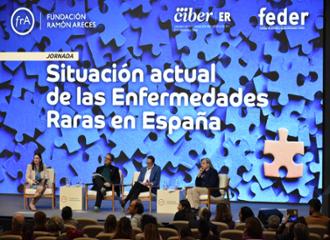
La Fundación Ramón Areces refuerza su compromiso con las enfermedades raras
Published on 04/23/2024


