
EN
- ES
- EN
15th National Research Competition in Life and Earth Sciences
Rare diseases
Research Centre or Institution : Centro de Biología Molecular "Severo Ochoa". CSIC-Universidad Autónoma de Madrid
Huntington's disease (HD) is caused by polyglutamine expansion in the huntingtin protein that leads it to aggregate and form inclusion bodies (IBs). IBs are a common feature of neurodegenerative diseases. In the case of Parkinson's disease, they are formed by the alpha-synuclein (a syn) protein. Because there are hereditary forms of Parkinson's disease due to mutations (point or duplication mutations) of a syn in the gene, it is known that alterations in the aggregation or levels of a syn are sufficient to cause neurodegeneration. Based on the preliminary results of co location of a syn in the IBs of patients and animal models for HD, it was hypothesised that a syn is a key mediator in the pathogenesis of HD. The main objective of the proposal is, therefore, to generate and analyse transgenic mice with HD with different gene doses of a syn.
 Activities related
 Projects related
 News related
 Publications related
Panel Discussion Mundo de las prótesis, los nuevos materiales, sus complicaciones y su futuro Madrid , Lunes, 8 de abril 2024. 17.00 horas
Session Situación actual de las Enfermedades Raras en España Madrid, Martes, 23 de abril de 2024, 10:00 horas
Conference Genes de mosca y genes humanos: una comparación Madrid, Jueves 09 de mayo de 2024, 19:00 horas
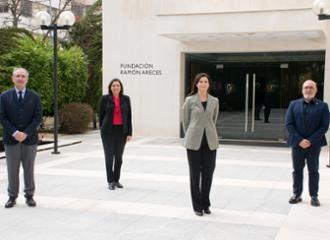
Eric D. Green: “La genómica debe integrarse en la medicina convencional”
Published on 03/12/2021


