
EN
- ES
- EN
16th National Research Competition in Life and Earth Sciences
Rare diseases
Research Centre or Institution : Centro Nacional de Investigaciones Oncológicas (CNIO). Madrid
The engineering of protein-DNA interactions may give rise to new "tools" to modify the genome. Meganucleases and TALENs are powerful tools for the manipulation of the genome, creating in the double strands of DNA breakages that can be sealed by means of homologous recombination. These enzymes may cause breakages in the DNA chain of eukaryotic genomes with a high degree of specificity. To be able to redesign these enzymes for this purpose, the basis for recognition of the interaction between the protein and the sequence of nucleic acid must be teased out to generate tailored enzymes targeted at sites of interest within the DNA. The engineering of proteins in domains such as meganucleases, "zinc fingers" or TALEs, has been proved to have potential for these methods, to create new specific and targeted instruments for the inactivation or repair of certain genes. The personalization of these enzymes with a high specificity to recognise specific sequences of DNA is the key tool in a new targeted cell therapy that eliminates alterations and promotes cell repair. When this action is carried out in genes involved in single gene diseases, it would be possible to restore the original function of the defective genes in question. During this year, it has been shown that the 4 pairs of central bases in the DNA sequence of the 22-nucleotide substrate of the aI-CreI endonuclease (which do not show any specific protein-DNA interactions) do not lack information for the recognition of the DNA sequence. The data suggest that this substrate region plays an important role by the indirect reading of the target, opening up the possibility of a totally rational search for new sequences, thereby improving the development of enzymes redesigned for therapeutic and biotech applications. Additionally, the crystallographic structure has been resolved for a new protein domain of DNA interaction, potentially usable as the mould to generate new interactions with certain sequences.
 Activities related
 Projects related
 News related
 Publications related
International Symposium New Insights in Cancer Discovery 2022 Madrid, Monday and Tuesday, 7 and 8 March 2022, 10:00 hours
Panel Discussion Mundo de las prótesis, los nuevos materiales, sus complicaciones y su futuro Madrid , Lunes, 8 de abril 2024. 17.00 horas
Session Situación actual de las Enfermedades Raras en España Madrid, Martes, 23 de abril de 2024, 10:00 horas
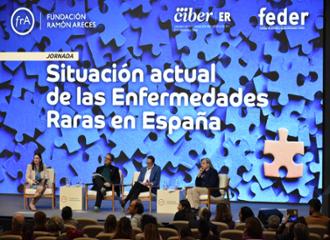
La Fundación Ramón Areces refuerza su compromiso con las enfermedades raras
Published on 04/23/2024


