Fundación Ramón Areces - Memoria anual
Sección de idiomas
en
- es
- en
Fin de la sección de idiomas

Jump Main Menu. Go directly to the main content
 Letter from the Chairwoman of the Board of Trustees
Start of main content
The COVID-19 pandemic has been accompanied by a huge amount of false and misleading information. Fake news and hoaxes are extremely dangerous because they generate confusion, foster distrust in institutions and endanger public health. This colloquium addressed, among other issues, the formulas to effectively combat the dissemination of disinformation in the current pandemic circumstances.

From March 2019 we are living in the unforeseen consequences of a pandemic in the economic field, particularly in certain sectors (restaurants, hospitality, public sector, and services), a state of insolvency (likely, imminent, or current) in many companies (companies, professionals or entrepreneurs) and also in individuals by the situation of unemployment to which they have been forced into, it will be very difficult to overcome without adequate means. This conversation dealt with the means and tools existing in our legal system to alleviate and overcome the economic difficulties or insolvency situation in which companies (companies or professionals/entrepreneurs) or individuals (natural consumers) are currently.
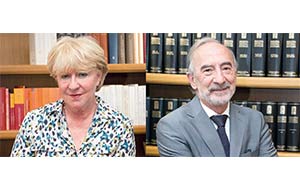
The COVID-19 pandemic has meant that the gap between high- and low-income households is no longer just digital but also educational. Education is going to be increasingly digital and that is why it is key to implement a new teaching-learning process in equal educational opportunities. Jorge Calero, Professor of Applied Economics at the University of Barcelona, assured in this debate that the closure of classrooms during the pandemic would increase the educational gap. Almudena Sevilla, Professor of Economics and Public Policy at University College London, said that tutoring to support the lowest income students, who are the ones who can be left behind the most, can be a solution to avoid the educational gap.
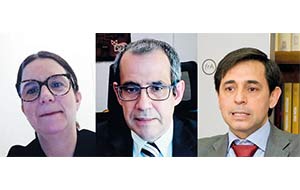
One of the biggest novelties that COVID-19 has brought to the analysis and monitoring of the economic situation is the use of real-time economic indicators. The fast movement of the pandemic and the need to continuously monitor its impact on economic activity has generated a great interest in obtaining information that allows measuring the economic state such as the heart rate monitors that many of us wear on the wrist.

The COVID-19 pandemic has produced, in addition to a painful loss of human lives, an unprecedented recession and an unequal impact between men and women. Although the incidence of the disease is lower among women, the propensity to perceive the severity of this and comply with restrictions is lower among men. What has happened in the job market? and in the family sphere? Will there be greater reconciliation of work and family life after the pandemic?

Since the COVID-19 pandemic broke out, international, national, and local policies have had varying degrees of success in containing and reducing the spread of the virus. The speakers examined the impact of COVID-19 and the challenges of global inequality policy from institutional, gender and health perspectives. They also focused on the significant local impact of COVID-19 on cities and regions, the drivers of national economic growth, but also often the manifestation of inequality within metropolitan areas.

The COVID-19 pandemic has highlighted the needs that exist around the problem of aging and dependence. This is a dimension that will gain weight in the coming years with the progressive retirement of the 'baby boomers'. In this conversation, the complexity and magnitude of this problem were analyzed from different perspectives and ideas were formulated to address them in the future.

The COVID-19 pandemic has led to a profound human, social and economic crisis around the world. In this unfavorable context, the European Union approved several aid programs, the most important being the so-called EU Next Generation. The speakers at this colloquium agreed when it came to suggesting reforms, greater transparency, continuous evaluation, and coordination to ensure that these funds promote long-term or sustained progress.

The pandemic caused by the COVID-19 has led to radical changes in the economy, in the mode of work, shopping habits, in the health management in the research work, in political life, in the productive processes. These are changes that affect especially the young and old and make us think that we need a new social contract, this set of agreements, explicit or implicit, between citizens, that structure our life together as a society, sometimes supported by legal standards, in part on institutional practices and, in part, on public services. In this online conversation, we wanted to analyze how the relations between all social agents and institutions will be from now on.


Almudena Sevilla "In education we will never return to the exclusive face-to-face system"
End of main content